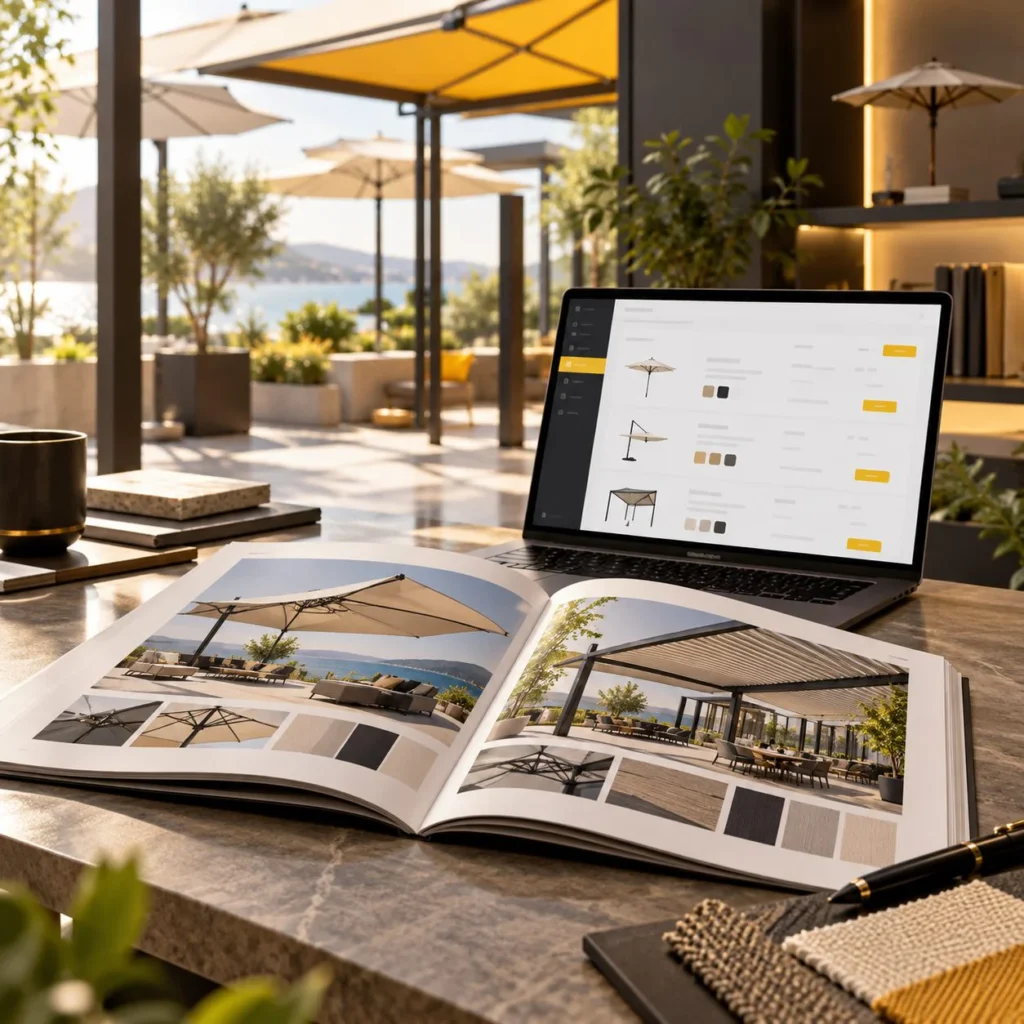
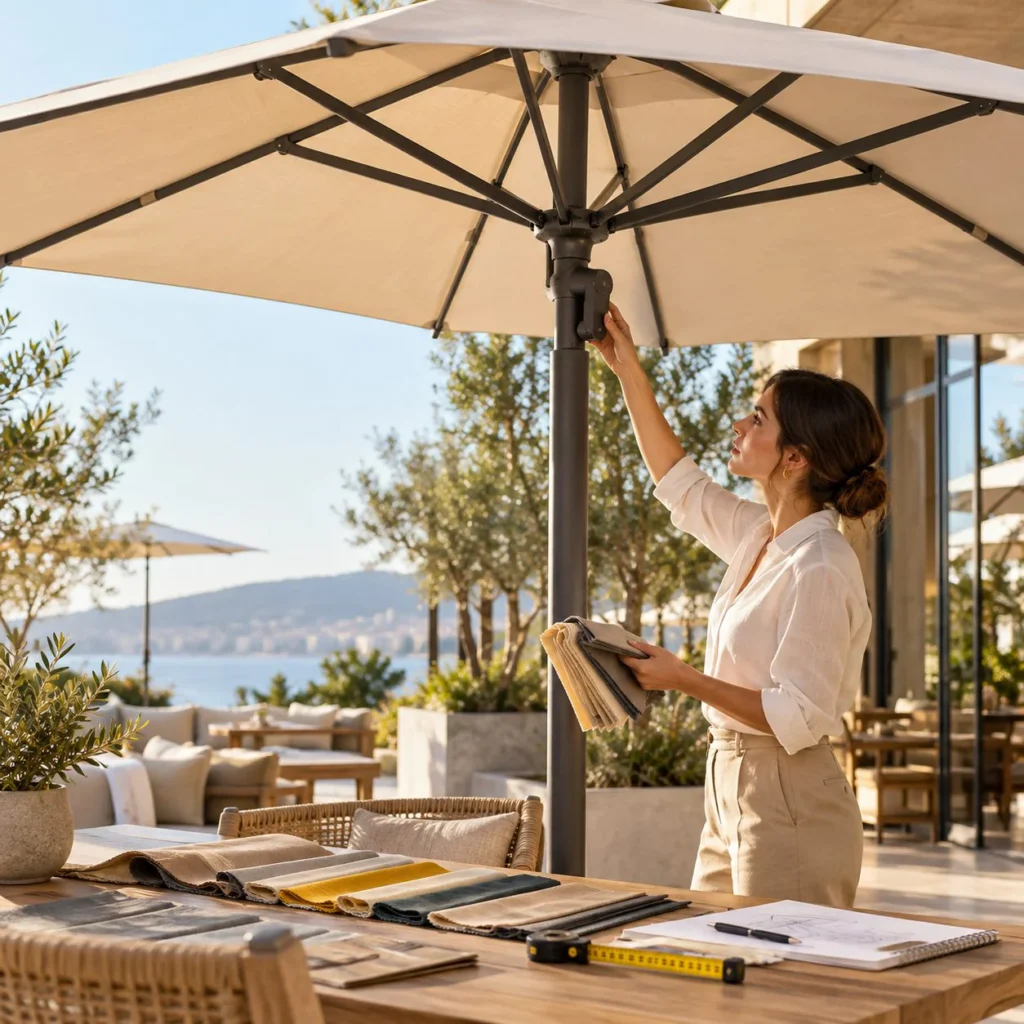
The right umbrella; It is not only for protection from the sun, but also determines the comfort of the place, customer satisfaction and the appearance of the business. Wrong size, unsuitable fabric or inadequate underlayment will soon result in both complaints and replacement costs. In this guide, we have compiled the points to consider when choosing an umbrella for hotel, restaurant, cafe, beach and terrace projects.
1. Clarify the usage area first
The same umbrella is not suitable for every place. Before you start choosing, clarify the answers to these questions:
- In which area will the umbrella be installed: restaurant terrace, poolside, beach, balcony or garden?
- How many tables or sun loungers will be underneath it, how many people will use it at the same time?
- Will the umbrella remain open all day or will it be opened and closed frequently?
- Is the area exposed to wind? Wind effect is evident on the coastline and high-rise terraces.
- What is the ground: tile, wood deck, grass or sand? The choice of litter depends on this.
- Where to store umbrellas at night and in winter?
These answers determine almost all of the measurement, mechanism and substrate decisions. For example, while ease of use comes to the fore in a restaurant terrace that is frequently opened and closed, lightness and portability become more important in a seasonal beach area.
2. Determine the correct size
The main job of the umbrella is to be able to cover the table and those sitting, although the shadow may shift during the day. Therefore, the umbrella diameter or edge length should be significantly larger than the area where the tables and chairs are drawn. In common practice, it is recommended to leave approximately 50–80 cm in all directions. The table below is a starting point; The final measurement should be clarified according to the layout of the space and the sun direction.
| Desk / usage | Approximate table size | Umbrella size for starters |
|---|---|---|
| small table for 2 people | 70–80 cm | 200 × 200 cm or Ø250 cm |
| table for 4 people | 90 × 90 cm / Ø100 cm | 300 × 300 cm or Ø300 cm |
| Rectangular table for 6 people | 160 × 90 cm | 350 × 350 cm or Ø350 cm |
| Two tables side by side / large terrace | 2 tables combined | 400×400cm and above |
| Sun lounger and coffee table (poolside) | 2 sun loungers | Ø250–300 cm or side pole model |
The Gold catalog includes a wide range of sizes, from 180 cm beach umbrellas to large size models up to 700 cm. You can compare the size information from product catalog.
Square or round?
Square and rectangular umbrellas use space more efficiently in regular table arrangements and do not leave gaps in the corners. Round umbrellas, on the other hand, offer a more natural look in free-standing areas, around the pool and on the beach. Both forms are produced in different sizes.
3. Choose the mechanism according to the frequency of use
The mechanism directly affects the ease of daily use. In a business where staff open and close dozens of umbrellas every day, even a small difference creates a big difference in time and effort.
- String system: It is common in small and medium sized umbrellas with its simple structure; It is easy to maintain.
- Manual system: Provides a more controlled solution for opening and closing in medium and large sizes.
- Telescopic system: Provides ergonomic opening-closing and balanced shade in large sizes; Suitable for heavily used areas.
- Side Pole: Since the pole is outside the table, it leaves the table center empty. See side-mast vs. center-pole comparison for details.
4. Fabric: look at durability as well as color
Umbrella fabric works under sun, rain, salt and constant use. When choosing fabric, pay attention not only to color, but also to the following features:
- UV resistance and color fastness: Fabrics that do not fade in the sun, yarn dyed or mass dyed, retain their colors for a longer time.
- Water repellent feature: It repels light rain and dew moisture and helps the fabric dry faster.
- Air permeability: Reduces heat accumulation underneath; Increases comfort in hot climates.
- Ease of maintenance: Fabrics that are stain-resistant and can be cleaned with mild soapy water are preferred in businesses.
- Corporate application: Logo, special color and printing options provide brand visibility.
Since fabric and color options may vary depending on the project, it is sufficient to share your needs at the proposal stage.
5. Skeleton and material
Aluminum frames are the most common choice in outdoor umbrellas due to their lightness, resistance to rust and long life. The number of arms, arm cross-section and the quality of the connection points largely determine the wind performance. Larger umbrellas use more arms and stronger center pieces.
When choosing the frame, pay attention to the surface coating (e.g. powder coating or anodized) and the corrosion resistance of the fasteners. Especially at the seaside, this detail directly affects life.
6. Substrate and floor
The base is the most critical component that ensures the safety of the umbrella. Weight; It is determined according to the umbrella size, the type of model (center pole or side pole) and the wind condition of the region. Umbrellas with side poles generally require a heavier and wider base because their center of gravity is outside.
- Always use the manufacturer’s model-specific recommendation for litter weight.
- Wheel bases provide ease of relocation; It should be braked or locked in stationary use.
- On surfaces such as grass, sand or deck, the contact surface and compatibility of the pad with the ground is important.
- Stone block and modular bases can be adapted to different sizes.
You can examine the coaster options in the Umbrella Coasters category.
7. Checklist before purchasing
- Is the usage area and table/sunbed arrangement clear?
- Has the shade size been calculated by making allowances for the area where the tables and chairs are placed?
- Is the square/rectangular or round form suitable for the space?
- Is the mechanism suitable for daily use frequency?
- Have the UV and water repellent properties and color fastness of the fabric been questioned?
- Have litter weight and soil compatibility been verified model by model?
- Has a closing and locking procedure been established for windy days?
- Have winter storage and seasonal maintenance been planned?